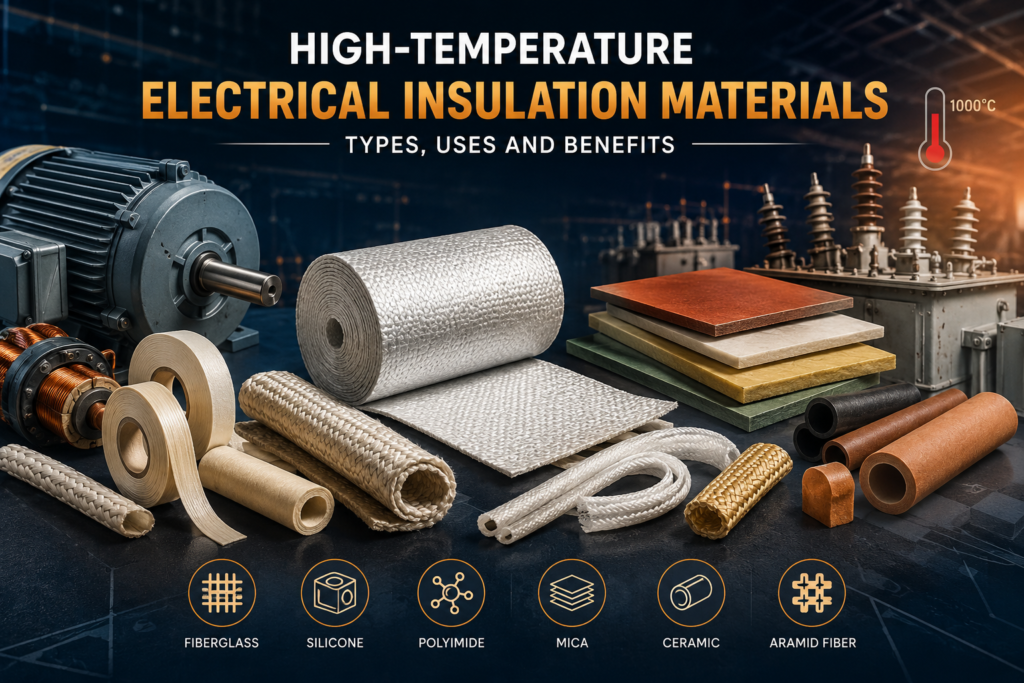
Electrical systems that function in harsh operating conditions such as engines, furnaces for industrial purposes, aviation structures, power plants, and machinery are vulnerable to one common element – heat. With increasing temperatures, the quality of conventional wires and insulation starts wearing off or failing to work effectively; thus increasing chances of failures, circuitry shorts, and fires. This is why there is an immense need to incorporate the use of high temperature insulation materials for electrical applications.
In this blog, we will discuss various kinds of high-temperature insulation materials as well as their uses in different sectors of engineering industry – all with a particular emphasis on Fiberglass Insulation Sleeves & Insulation Tapes High Temperature.
Why High-Temperature Insulation Matters
Any electrical or electronic device emits some amount of heat in its process of working, and most often are subjected to heat from outside sources like engine rooms, exhaust systems or from an industrial furnace. Normal PVC/rubber insulated wires cannot stand temperatures above 105°C and 125°C, as beyond these limits the insulation either becomes brittle or softens or loses its insulating property altogether and exposes the wires to danger.
The high temperature insulation compounds, on the other hand, can endure heat and still work fine at temperatures ranging anywhere between 150°C to 1000°C or even higher. They offer protection to the wires against heat, chemical damage, abrasion, and mechanical strains.
Common Types of High-Temperature Electrical Insulation Materials
1. Fiberglass Insulation Sleeves
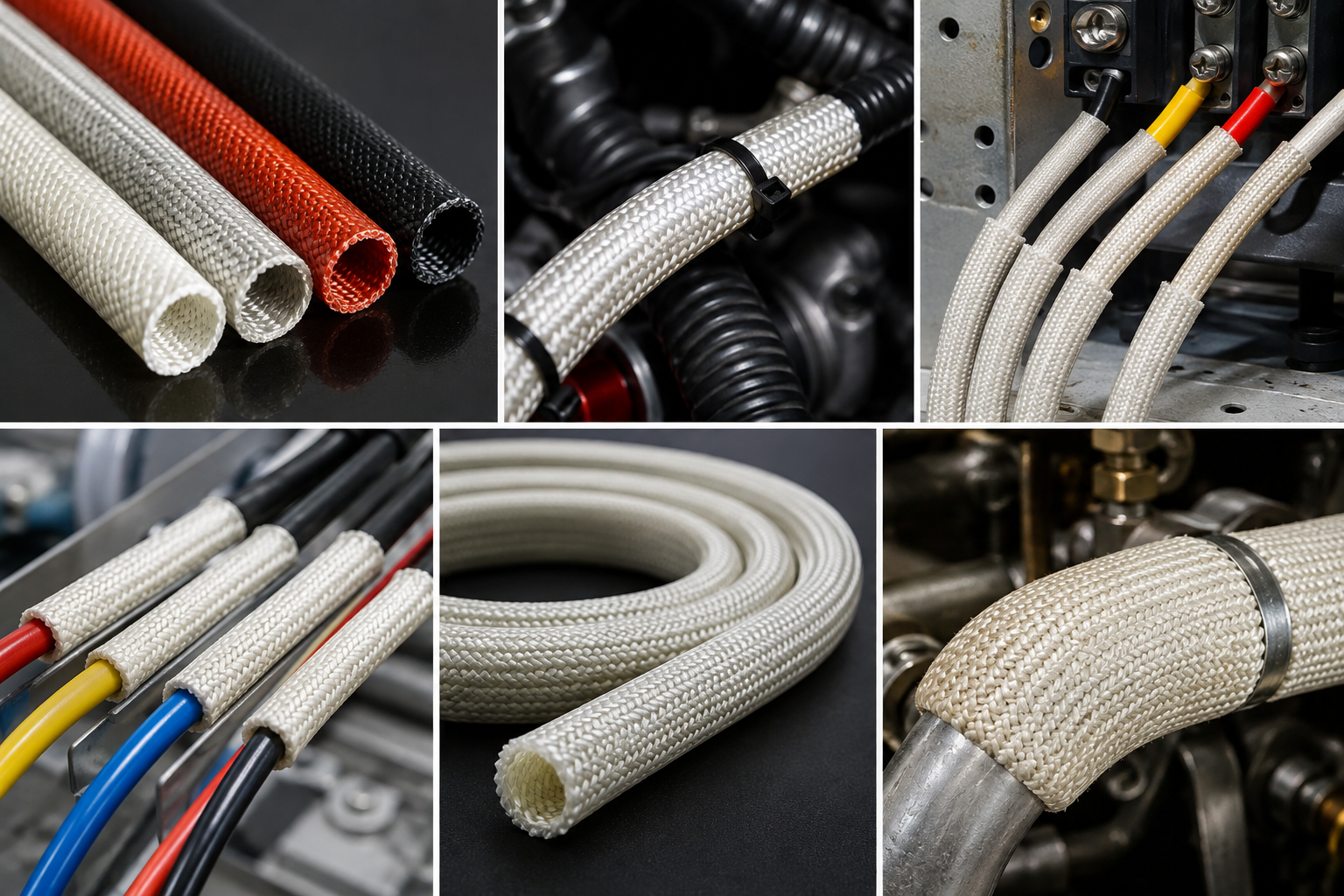
Fiberglass Insulation Sleeves represent one of the safest options available for wiring, cables and hoses that are subject to high heat environment. The sleeves are usually braided from fiberglass yarns and impregnated with materials such as silicone, acrylic and PU resins to increase the flexibility of the material and resistance to abrasions as well as to provide dielectric properties.
Key characteristics:
- Resistance to high temperatures from 200°C to 600°C and more (depending on the material of impregnation)
- Resistant to heat, fire, abrasions and chemical damage
- Flexible and lightweight (easy installation over the existing wiring)
- Dielectric material
The sleeves find their usage in automotive wiring harnesses, various industrial furnaces, power generation devices, etc. Their braided structure allows protecting the materials from sparks and splash.
2. Insulation Tapes High Temperature
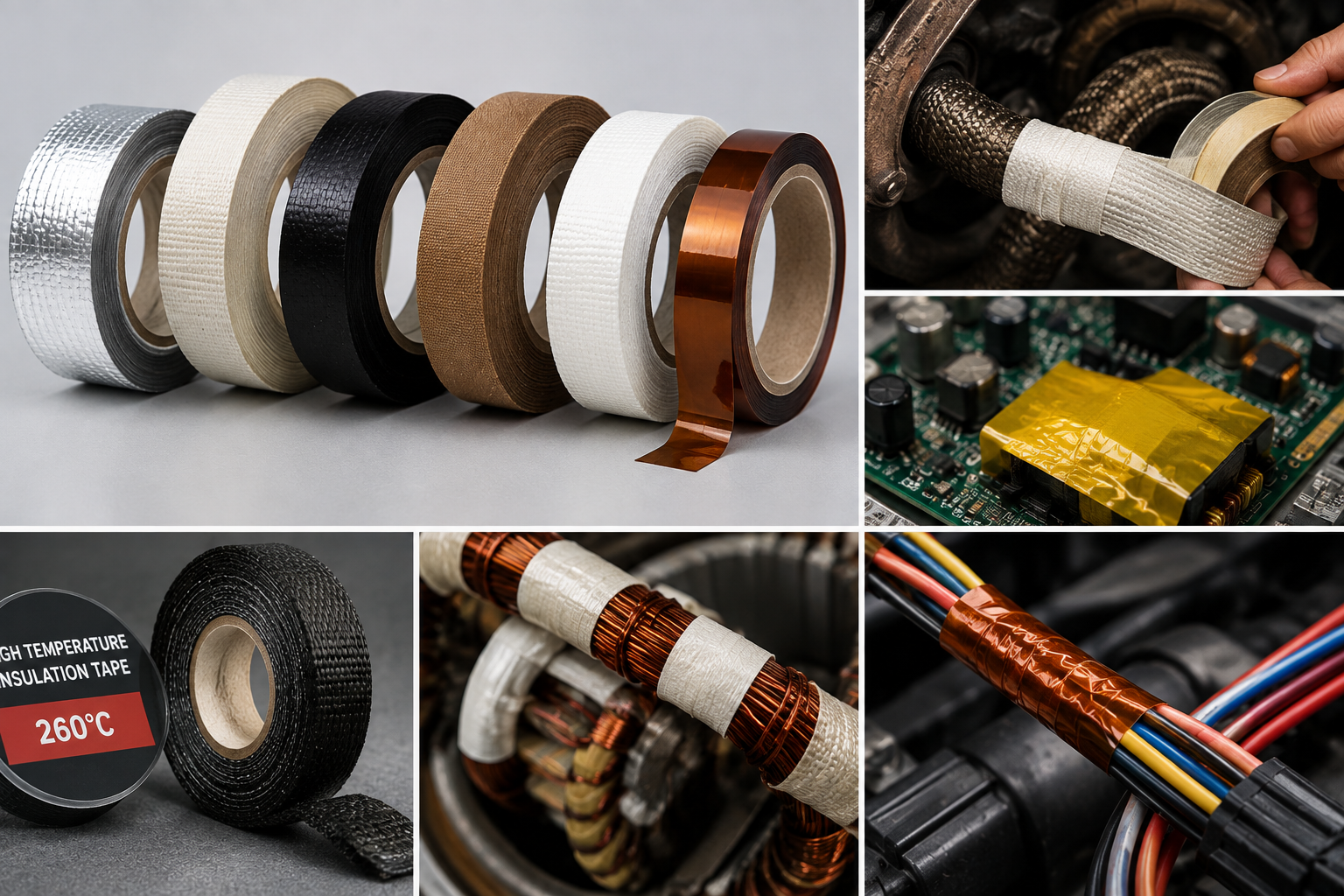
Insulation Tapes High Temprature products are engineered to bundle, wrap, and protect wires and cables where flexibility and quick application matter. Unlike standard electrical tape, high-temperature variants are made from materials such as PTFE (Teflon), silicone, mica, or glass cloth, allowing them to endure extreme heat without losing adhesion or insulating properties.
Key characteristics:
- Temperature resistance from 180°С to 300°C or more (for mica tapes temperature can reach 1000°C in fire barrier tapes)
- Oil, moisture, and chemicals resistant
- Excellent electrical insulation and dielectric properties
- Conformability and possibility to use on various surfaces
These tapes are widely used for wire and cable harnessing, insulation of motor windings, splicing as well as providing the necessary barrier from heat for the electrical connector. Easy to apply manually these tapes are used both in production line and during on-field repairs of various facilities.
3. Silicone Rubber Insulation
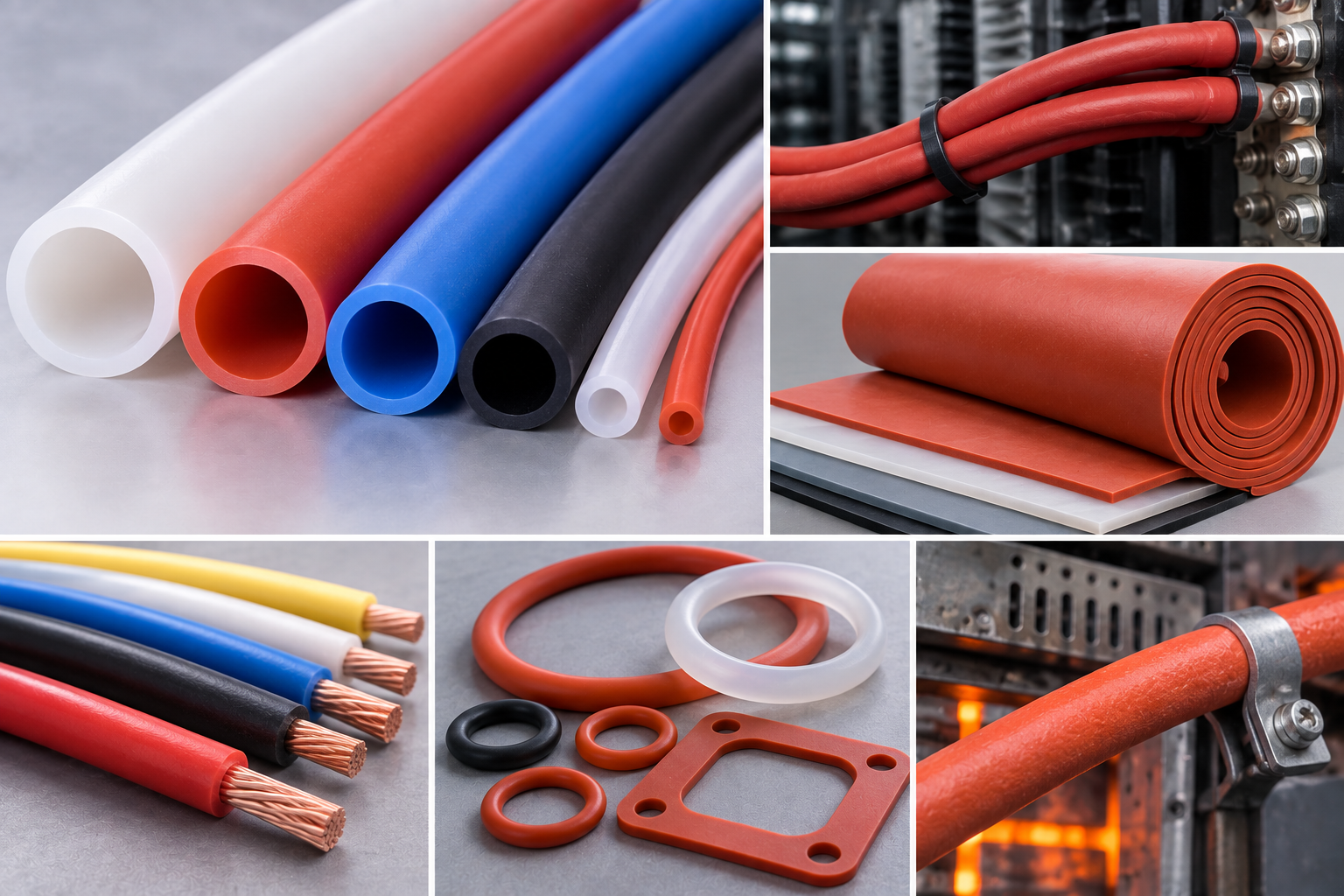
Silicone rubber provides good flexibility within wide temperature range (-60°C to 200°C) as well as resistance to UV radiation and ozone and moisture resistant. The material finds wide usage as cable jacket, gasket and moldable insulation component.
4. Mica-Based Insulation
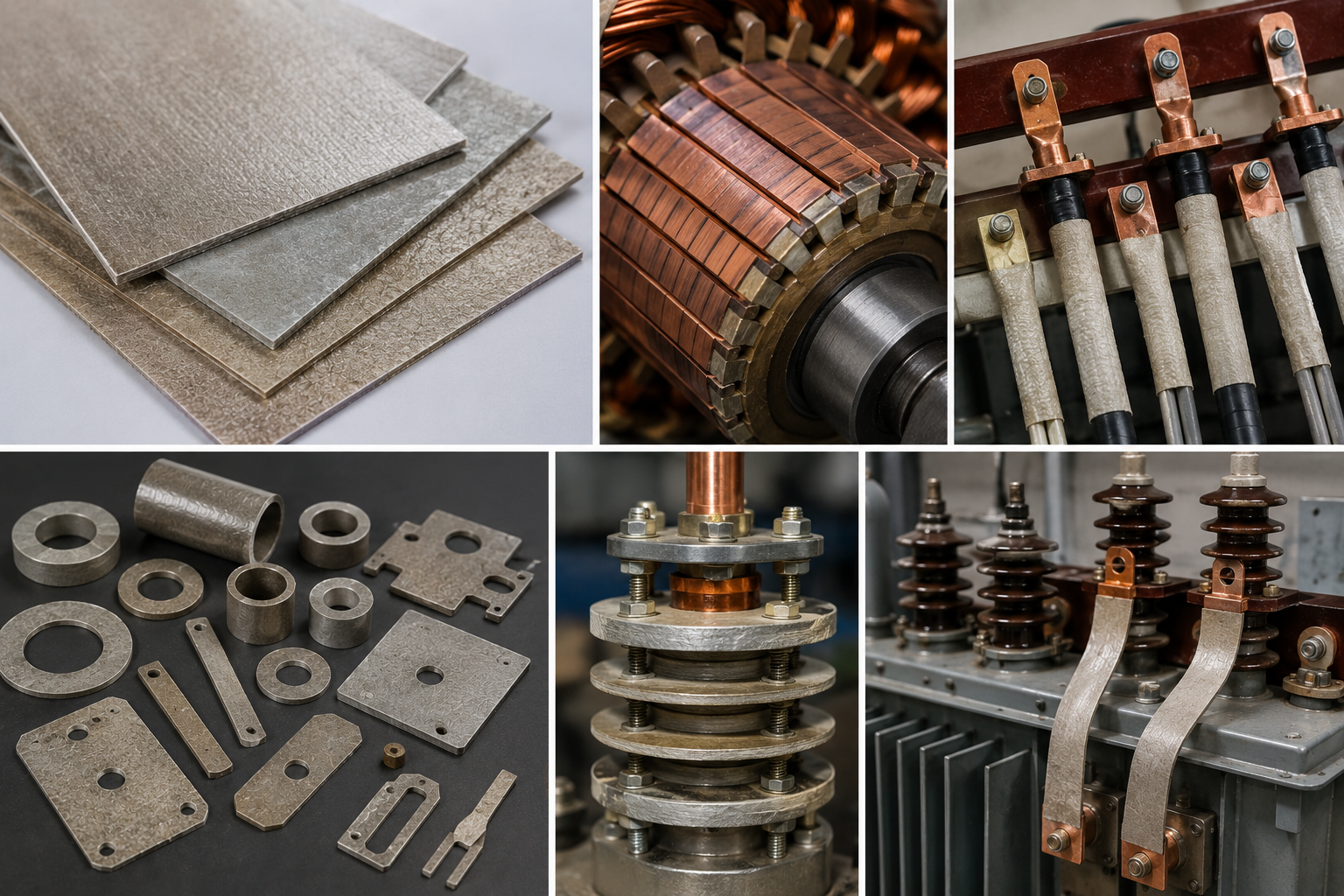
The mica is a natural compound with excellent heat resistance. The temperature range can be more than 500°C, and there are even some variations that can resist heat up to 1000°С for several minutes. This insulation is usually utilized in fire-proof cabling systems, motor and generator insulation and in places with strict requirements regarding fire proof, such as emergency lighting systems and fire alarms..
5. PTFE (Teflon) Insulation
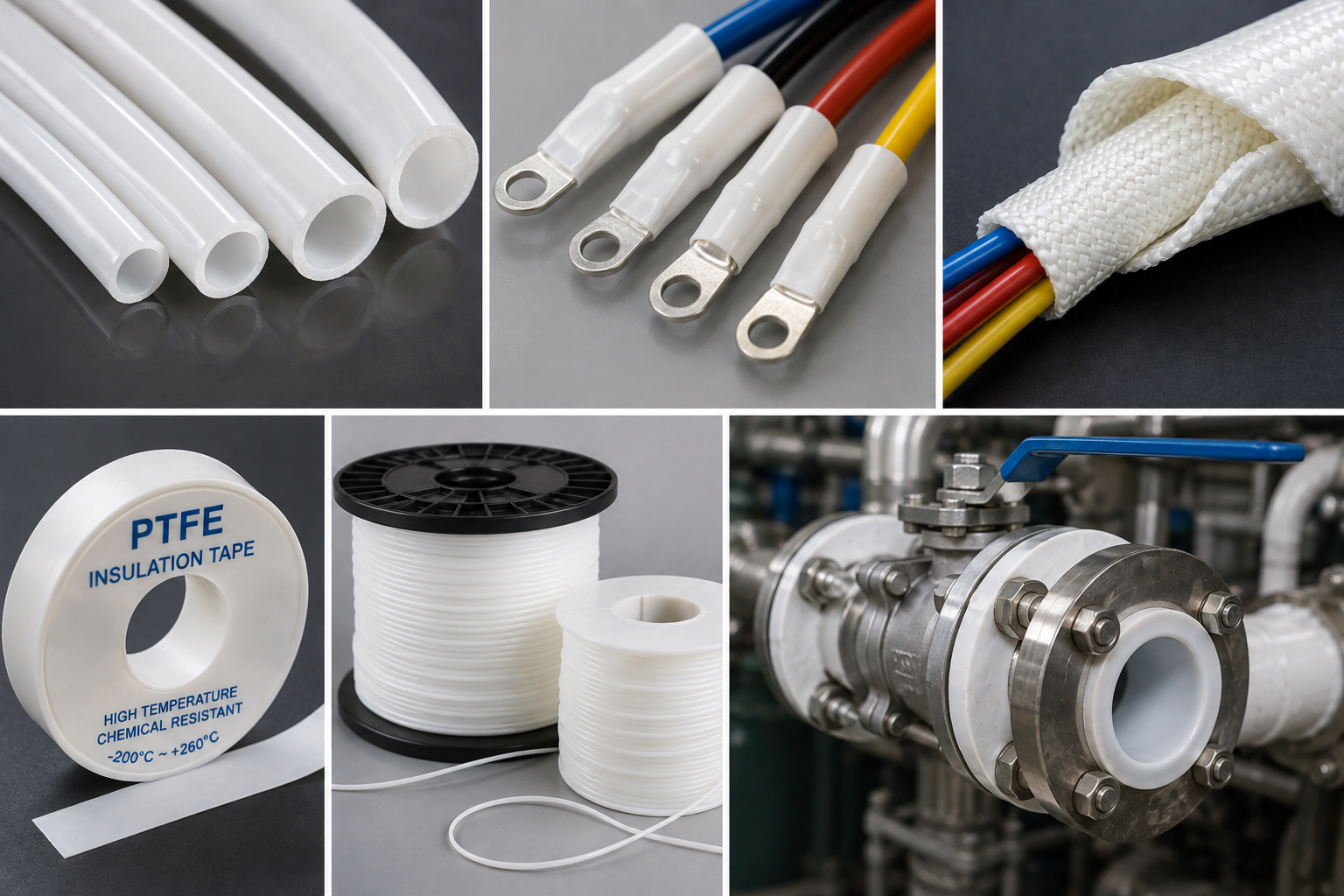
The PTFE insulators provide extremely good heat stability (up to 260°C), and excellent chemical resistance and low friction coefficient. This type is commonly used in aircraft wiring and electronic components for medical equipment.
6. Ceramic Fiber Insulation
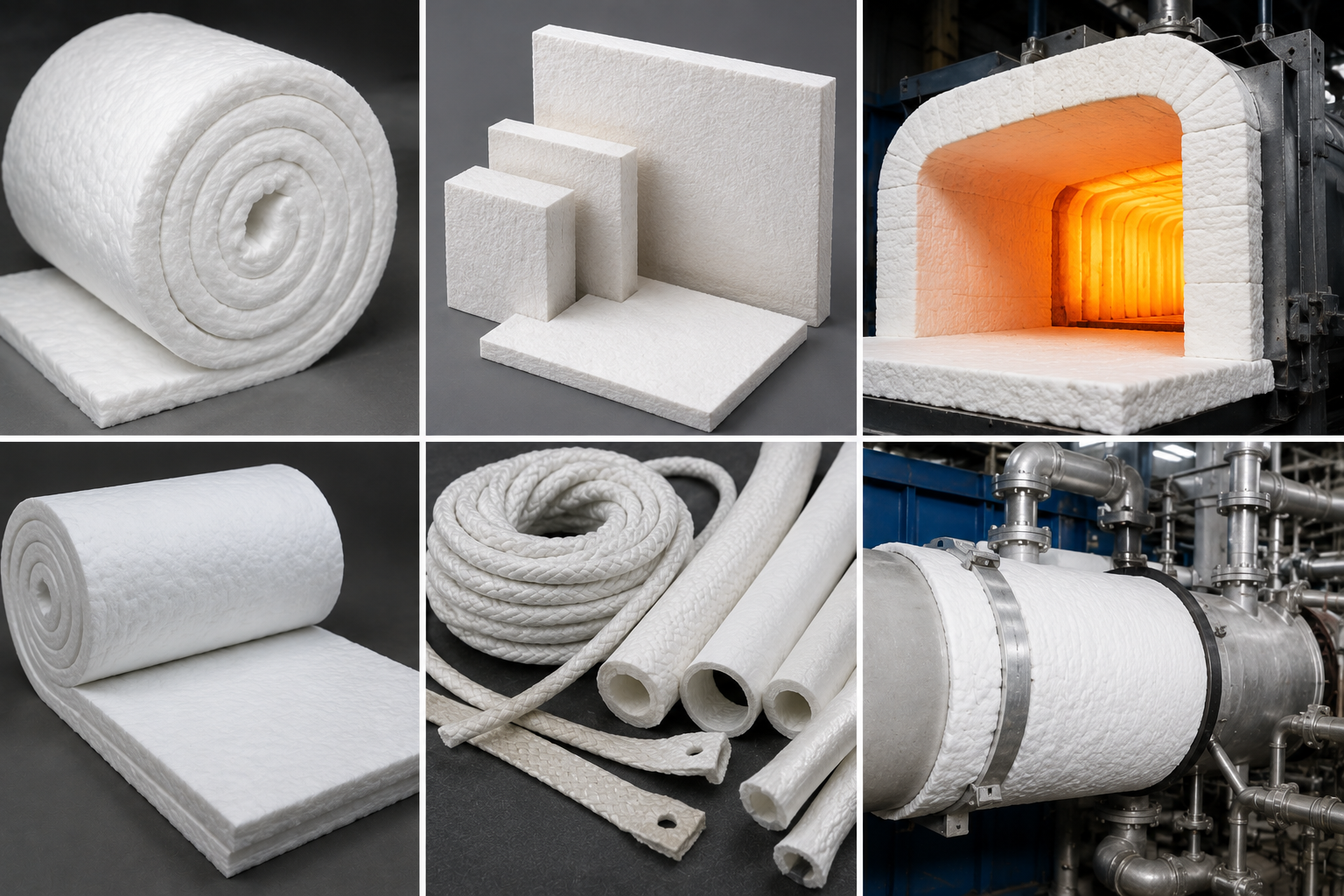
For the hottest environments – for example furnace lining, kiln wiring, heating elements – ceramic fibers can stand heat up to 1200°C. It is usually applied in the form of sleeves and ropes around cables passing through the heat area.
Key Applications Across Industries
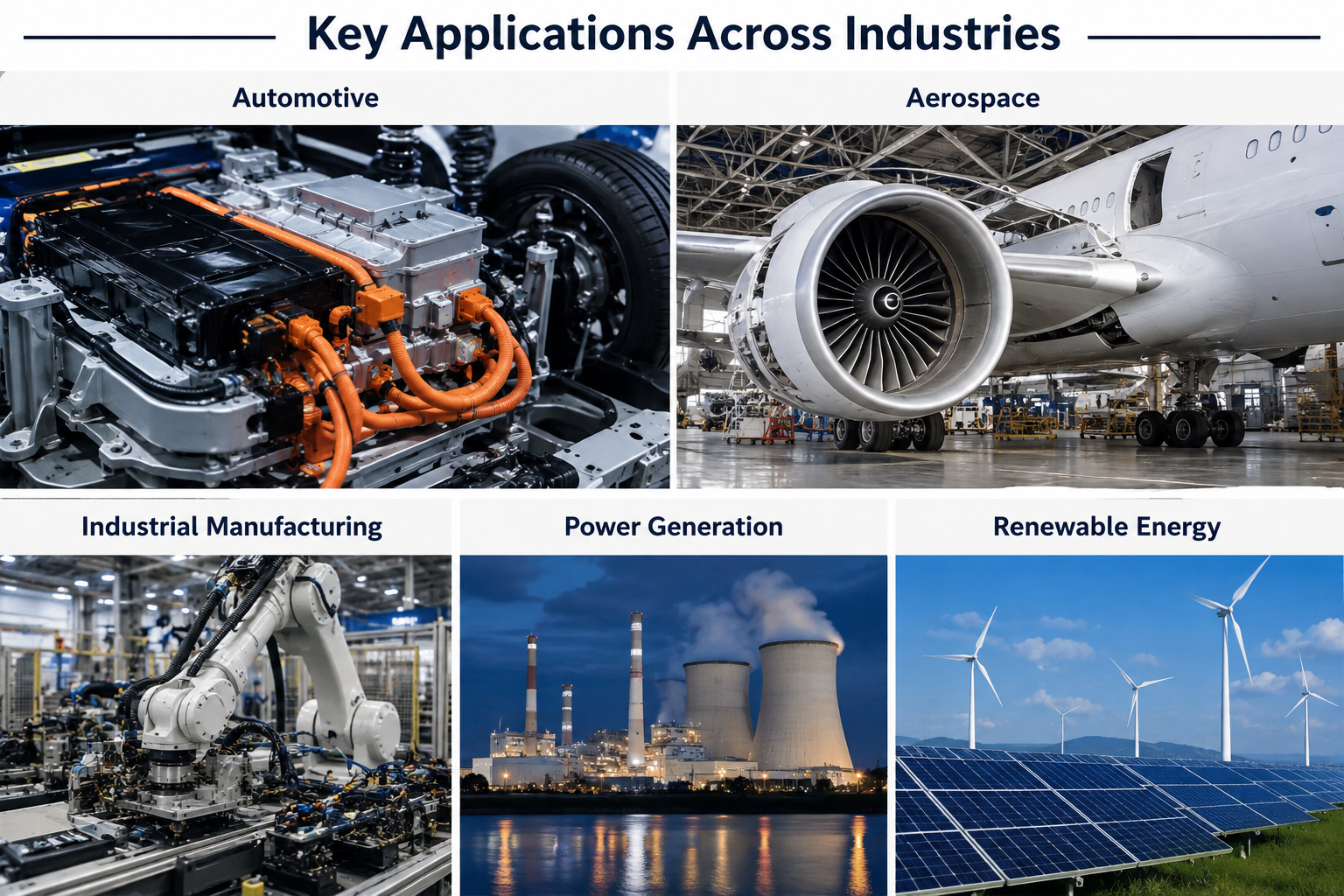
- Automotive: The wire harnesses inside engine bays, sensor wires of the exhaust system, and battery wires all need fiberglass sleeves and silicone tapes to withstand heat and vibrations.
- Aerospace: Light, high-grade insulation materials become the priority in case of engine wiring and avionics wiring, which requires using PTFE and fiberglass materials.
- Industrial Manufacturing: Ceramics and mica insulations become essential in furnaces, kilns, and heating equipment in order to provide protection for control wire harnesses.
- Power Generation: Mica and Silicone insulation becomes the most suitable insulation materials for motors, generators, and transformers.
- Renewable Energy: Hot temperature wire tapes and sleeves should be used to provide wires in solar inverters and wind turbine components.
Benefits of Using High-Temperature Insulation Materials
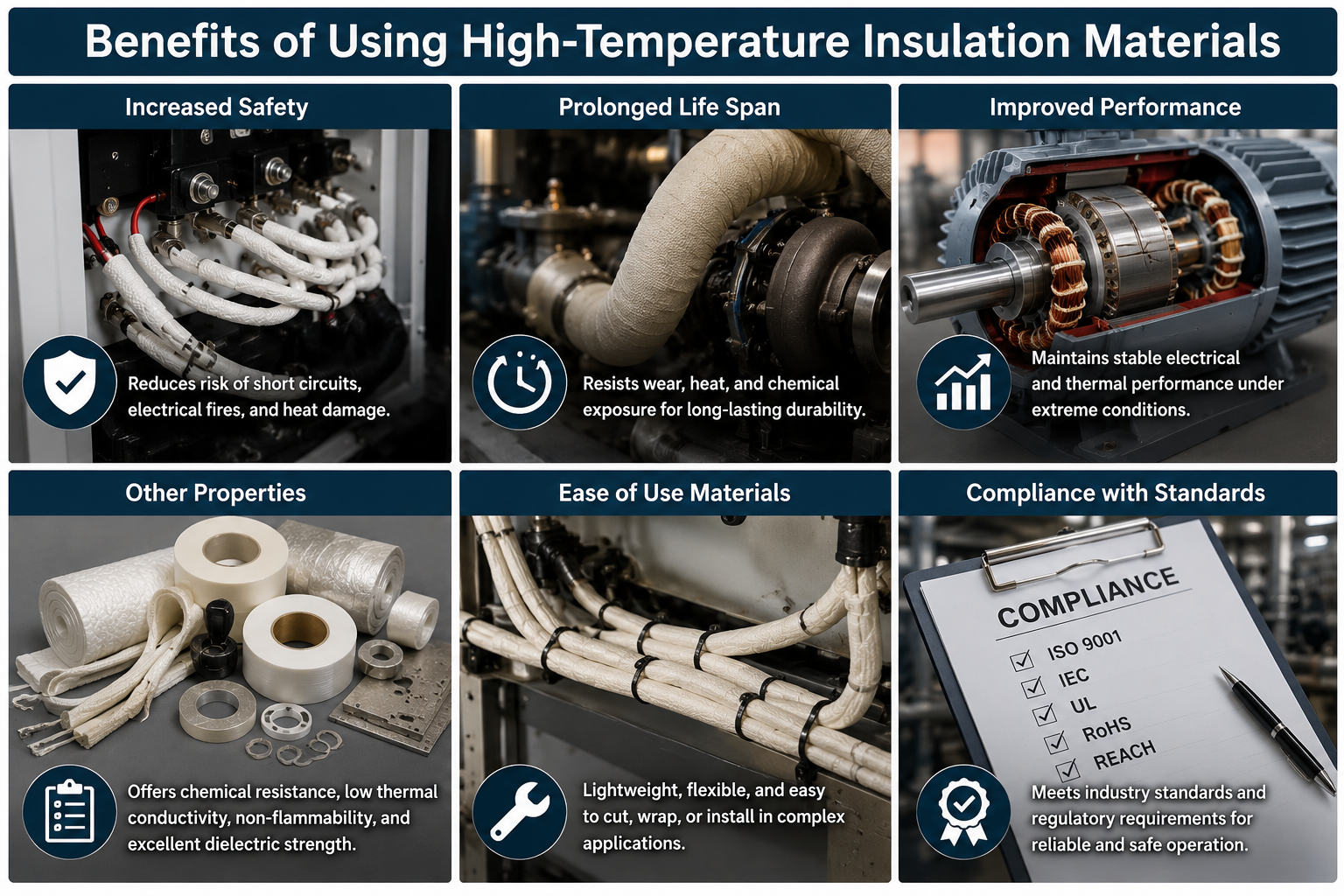
- Increased Safety Since these materials do not have insulation breakdown issues, there will be no electrical dangers such as fires, shorts, and arcing. Hence they are safe for both the equipment and the machine operators.
- Prolonged life span The cables will have a long life without needing any repairs since insulation protects the machines from thermal damage.
- Improved Performance under adverse conditions The cables can perform efficiently despite adverse operating conditions in applications such as foundries, engine blocks, and even in assembling aerospace components.
- Other properties Apart from their resistance to heat, many high temperature materials are resistant to oils, abrasions, and solvents such as fiberglass sleeves and PTFE tapes.
- Ease of use Materials like Insulation Tapes High Temperature and Fiberglass Insulation Sleeves can be trimmed, wrapped around wires, and even slid easily to cover the wiring, making them convenient for OEM applications as well as repairs.
- Compliance with standards There are regulations in various industries regarding thermal insulation as well as fires. Many such industries including aerospace, automotive, and electricity generation require manufacturers to comply with standards such as UL and RoHS among others.
Choosing the Right High-Temperature Insulation Material
Selecting the correct insulation depends on several factors:
- Material operating temperature
- The flexibility required of material for the application – sleeving material will be used for even applications where as taping will be employed for odd shapes
- The environmental conditions that will be present when material is used – such as chemicals, wet or dry, UV light
- Voltage requirement
- Method of installing the insulation
For most uses of high heat resistance in wiring harnesses, Fiberglass Insulation Sleeves present a perfect combination of flexibility, durability, and resistance to high temperatures. In situations where it is necessary to bundle wiring or even repair wiring harnesses in difficult or unusual situations, the Insulation Tapes High Temperature become an easy and practical choice.
With the ongoing pursuit of high performance from their equipment, the need for high-quality insulation materials that can withstand high temperatures continues to increase in various industries. Whether you have a need for Fiberglass Insulation Sleeves for protection of wiring harnesses or Insulation Tapes High Temperature that allow fast installation and conformity around connectors and joints, it is essential for your operation to keep your wiring harnesses insulated and protected.
Frequently Asked Questions (FAQs)
Q1: What temperature range is Fiberglass Insulation Sleeves suitable for?
It depends on the coating (silicone, acrylic, or PU resin), fiberglass sleeves withstand constant temperature range of 200°C to 600°C and can be used in automotive, industrial, and aerospace applications.
Q2: Is there any difference between high temperature insulation tapes and the common electrical tapes?
Conventional electrical tapes, which usually based on PVC compound cannot withstand higher temperature and will degrade at lower temperatures usually below 105°C. High-temperature insulation tapes are made of silicone, PTFE or mica-based tape. That way high-temperature tapes can withstand temperature of 180°C up to more than 1000°C in case of special mica tapes.
Q3: Can Fiberglass Insulation Sleeves be used outdoors?
Yes. It is possible due to the fact that some fiberglass sleeves are covered by silicone or acrylic finish. Such type of material provides resistance to ultraviolet light, moisture and weathering.
Q4: Reusable of high-temperature insulation tapes?
Almost all high-temperature insulations are not intended for re-use, because process of removal causes degradation of the adhesive power. Only silicone self-fusing tape can be repositioned after its applying.
Q5: What is the best insulation material if you need temperature range up to 1000°C and above?
For temperatures above 1000°C ceramic fiber insulation or mica tapes must be used. These products are widely used in the wiring of furnaces.
Q6: Do high-temperature insulation materials only protect from heat, or there also providing electrical insulation?
Good quality of high-temperature insulation materials is the provision of both types of insulation – thermal and dielectric.
Q7: How should I choose between sleeve and tape?
The main application of the sleeves is the use on the long continuous cable runs, because they are slid along the cable before termination. Tapes are applied on the irregular surfaces, cable bundling and repairing existing insulation in the field.